
Have you ever made a decision that wasn’t final yet? Maybe you gave someone a tentative job offer, or you agreed to a provisional plan that still needed approval.
So, what exactly does tentative mean, and why is it so important in the workplace? Let’s break it down and explore how the concept of “tentative” plays a role in HR, business, and beyond.
What Does Tentative Mean?
Tentative refers to something that is not final, definite, or confirmed. A tentative decision, plan, or agreement is subject to change depending on certain conditions.
Example: A company might extend an unconfirmed job offer to a candidate, pending background checks. It’s not a firm decision yet, but it shows serious interest.
In simpler terms:
“We’re considering it, but it’s not final yet.”
SEO Keywords: tentative, tentative meaning, meaning of tentative, define tentative, tentative job offer, provisional agreement, tentative schedule.
📝 Tentative Synonyms
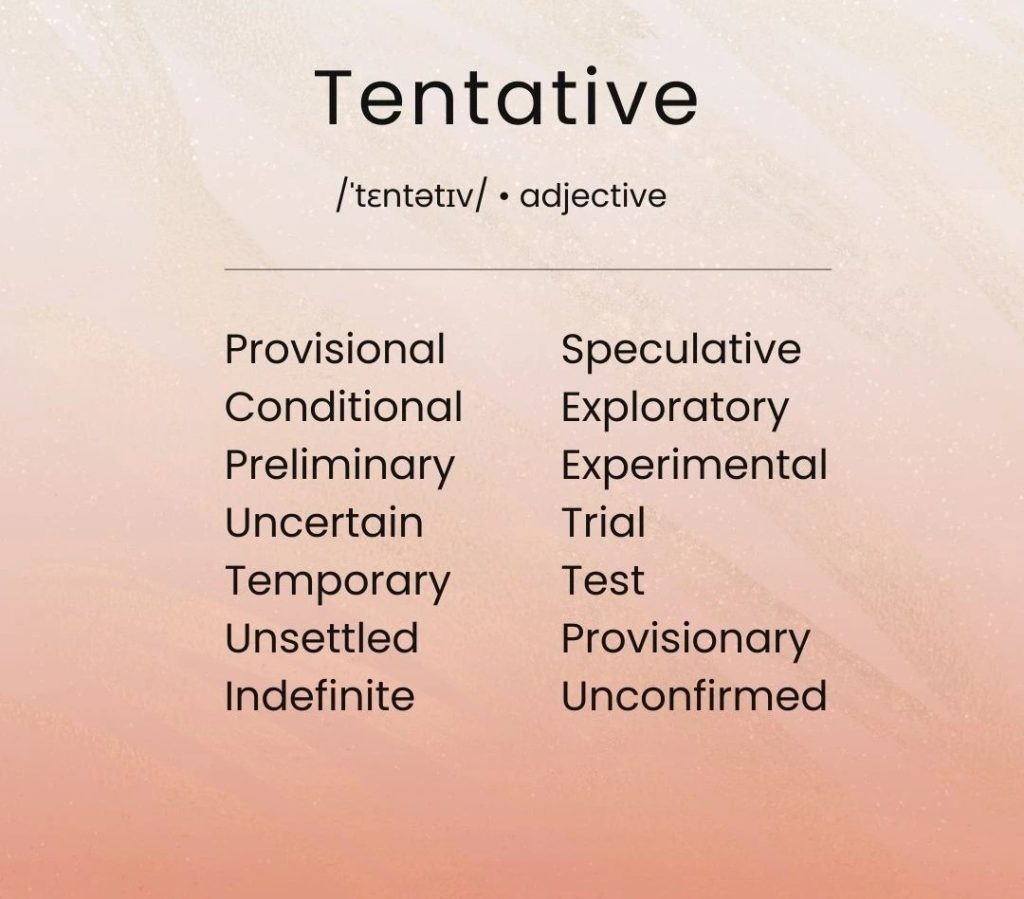
Looking for synonyms for tentative? Here are some commonly used alternatives:
- Provisional
- Conditional
- Preliminary
- Uncertain
- Temporary
- Unsettled
- Indefinite
- Speculative
- Exploratory
- Experimental
- Trial
- Test
- Provisionary
- Unconfirmed
- Subject to Confirmation
All these words convey the same idea: something is not final or can change.
Real-Life Examples of Tentative in Action
Understanding tentative decisions becomes easier with real-world scenarios:
- Tentative Job Offer: A candidate receives an offer that depends on background verification. It’s not permanent yet.
- Tentative Agreements: During union or business negotiations, a deal might be preliminary until approved by all parties.
- Tentative Plans: Early-stage projects often have flexible timelines that may shift as more information comes in.
Using a smart HRMS like Token Talent makes managing such provisional stages easier by keeping communication clear and timelines transparent.
Request a Free Demo of Token Talent to see how.
Why Temporary Decisions Are So Important
Provisional or experimental decisions play a critical role in business agility and risk management. Here’s why they matter:
- Room for Changes: Indefinite decisions give you the flexibility to adjust plans as conditions evolve.
- Clear Communication: Declaring something as exploratory prevents miscommunication and sets realistic expectations.
- Risk Management: Tentative agreements allow stakeholders to review, negotiate, and refine terms before final commitment.
Types of Temporary Decisions in the Workplace
You may encounter different kinds of tentative or provisional decisions in daily business operations:
- Provisional Job Offers: Conditional employment offers pending certain requirements.
- Provisional Agreements: Preliminary deals during negotiations awaiting formal signatures.
- Speculative Project Deadlines: Flexible timelines that adapt as the project develops.
- Provisionary Company Policies: Pilot policies subject to employee feedback and revision.
With Token Talent HRMS, tracking these decisions becomes structured, reducing confusion and ensuring accountability.
How to Manage Tentative Decisions Effectively
Managing tentative or provisional actions requires clarity and structure. Here’s how:
- Communicate Clearly: Always specify that the decision is temporary and may change.
- Example: “This is a tentative promotion. The final decision depends on performance evaluation.”
- Set Expectations: Define clear timelines for when the final decision will be made.
- Review Regularly: Keep revisiting the decision as circumstances evolve. What was tentative today may become confirmed tomorrow.
Token Talent can streamline this process with automated reminders, structured workflows, and transparent communication tools.
Request a Free Demo to simplify your HR decision-making.
Defining Tentative in HR and Business
Tentative actions are common in human resource management and corporate strategy. Examples include:
- Job Offers: Conditional offers pending verification.
- Performance Reviews: Tentative feedback given before final assessments.
- Salary Negotiations: Salary structures that may be revised before confirmation.
- Project Planning: Tentative schedules and milestones subject to stakeholder approval.
Conclusion
The word tentative captures the essence of flexibility and adaptability. Whether it’s a job offer, an agreement, or a project plan, understanding the tentative nature of a decision helps teams navigate uncertainty with confidence.
Tentative decisions are not final, but they open doors to refinement, collaboration, and better outcomes. By using the right tools—like Token Talent HRMS—organizations can manage these temporary stages smoothly and effectively.
Remember: Tentative means “in progress.” It can change, improve, or evolve—and that’s often a good thing.
FAQs
Q: What is the meaning of tentative?
A: Tentative means not final or confirmed; subject to change.
Q: How do you use ‘tentative’ in a sentence?
A: “The meeting is scheduled for Monday, but the time is tentative.”
Q: What is a synonym for tentative?
A: Provisional, temporary, conditional, preliminary, and uncertain.
Q: Is tentative the same as temporary?
A: They are similar but not identical. Tentative refers to something uncertain; temporary refers to something short-term.
Q: What does ‘tentative schedule’ mean?
A: A schedule that may change depending on further developments.
Empower your HR team with Token Talent.
Request a Free Demo to experience how smart HR software can help manage tentative offers, trial policies, and provisional agreements with clarity and control.