How can managers encourage struggling employees to perform better? As remote and hybrid work continue to reshape the workplace, this question is becoming more important than ever. Companies now need clear, supportive, and structured ways to evaluate, guide, and elevate employee performance.
A Performance Improvement Plan (PIP) gives managers a strategic roadmap to help employees succeed—without damaging morale or relationships. But the real impact comes when managers know how to communicate these plans effectively.
In this guide, we’ll explore the most practical and empathetic ways to create a performance improvement plan, how to communicate it clearly, and how HR tools like Token Talent can streamline the entire process from evaluation to follow-up.
What Is a Performance Improvement Plan (PIP)?
A Performance Improvement Plan (PIP) is a structured and formal document designed to help employees who are struggling to meet expectations. It outlines:
- The exact performance gaps
- Clear and measurable goals
- Expected timelines
- Consequences for not meeting the required standards
Instead of overwhelming employees, a PIP gives them a realistic growth plan aligned with organizational goals. A well-written PIP provides precise steps to improve performance and gives managers a standardized way to track progress.
With platforms like Token Talent, managers can track performance trends, set automated reminders, record discussions, and maintain data-backed documentation that makes the PIP process seamless, transparent, and fair.
When Should a Performance Improvement Plan Be Implemented?
A PIP can be used for a wide range of issues:
poor work quality
missed targets
low productivity
attendance problems
lack of clarity in the role
However, the key to success is intent.
A PIP should be implemented with a sincere desire to help the employee improve, not as a shortcut to termination. When combined with good communication and regular check-ins, a PIP can actually reduce anxiety and increase motivation.
It’s also important to note:
PIPs are not just for struggling employees.
They can also guide high-performing employees who want to transition to a new role or prepare for a promotion.
Benefits of a Performance Improvement Plan
1. Builds a Culture of Accountability
When employers invest in coaching and improvement, employees feel supported rather than judged. Using digital tools like Token Talent, managers can create a more transparent, fair, and empowering accountability framework.
2. Saves Time & Money
Replacing employees is expensive. A strong PIP improves performance while reducing turnover. PIPs often outperform annual reviews because they’re immediate, corrective, and goal-based.
3. Reduces Legal Liability
A clear PIP document protects employers by showing that expectations were communicated and opportunities were provided. Token Talent further strengthens this by storing secure digital records for compliance purposes.
How to Address Attitude in a PIP
When performance issues are tied to attitude—such as disengagement, poor communication, or negative behavior—the conversation becomes more delicate.
Here’s how to keep it productive:
Be Specific
Avoid vague statements like “Your attitude is bad.”
Instead, give clear examples such as missed deadlines, lack of teamwork, or unprofessional responses.
Focus on Performance, Not Personality
The goal is improvement, not criticism. Highlight how behavior affects team output, deadlines, and projects. Token Talent’s 360° review tools provide supporting data for these conversations.
Provide Guidance, Not Blame
Managers should offer clarity, support, and a path forward. Constructive feedback paired with actionable goals increases the likelihood of change.
How to Write a Performance Improvement Plan (PIP)
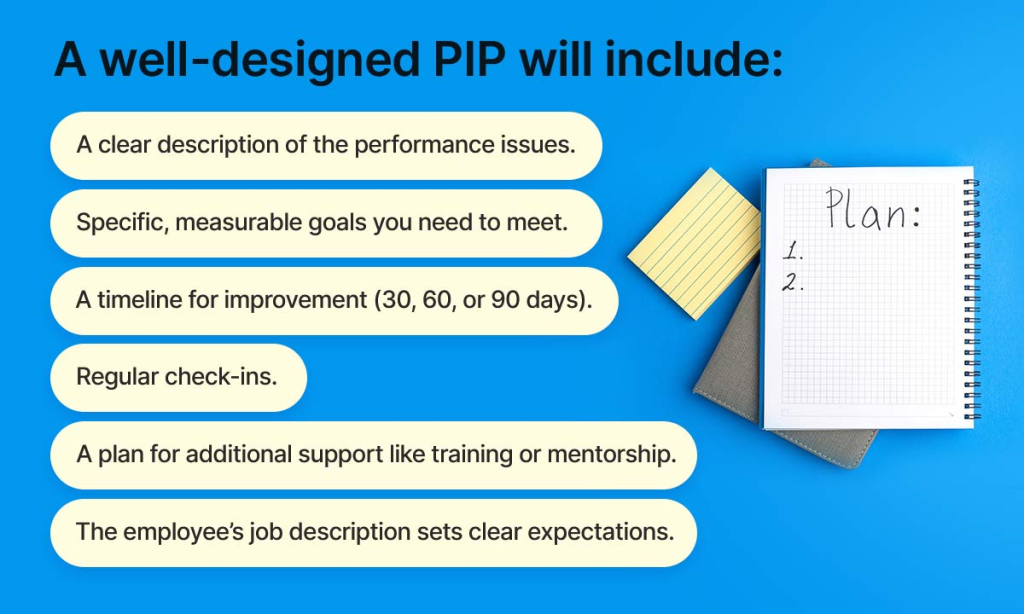
A strong PIP includes:
1. Define Acceptable Performance
Clarify what success looks like. Compare current performance with expectations, and use data from Token Talent’s analytics to highlight gaps.
2. Create Measurable Objectives (SMART Goals)
Goals must be:
- Specific
- Measurable
- Attainable
- Relevant
- Time-bound
Token Talent allows managers to set SMART objectives and track progress automatically.
3. Outline Resources & Support
Support may include:
- Training sessions
- Coaching
- Updated role clarity
- Peer mentorship
4. Schedule Regular Check-ins
Check-ins ensure accountability and help identify any additional support needed.
5. State the Consequences Clearly
If improvement doesn’t occur, consequences must be clearly documented to ensure fairness and transparency.
Performance Improvement Plan Best Practices
Plan Before You Act
Meet internally (manager + HR) beforehand. Prepare examples and finalize documentation in Token Talent to ensure consistency.
Listen Actively
Let employees share their perspective. They may reveal workload issues, resource shortages, or external challenges.
Find the Root Cause
Performance problems often have deeper issues such as burnout, unclear expectations, or skill gaps.
Highlight Their Strengths
Reinforce the employee’s value to the company to keep morale high.
Provide Ongoing Guidance
A PIP is a coaching tool—not a punishment. Offer support, resources, and ongoing visibility through Token Talent.
Follow Up Consistently
Track each milestone through scheduled check-ins. Token Talent’s automated reminders make this easier and more organized.
Employee Attendance Improvement Plan Example
Below is a sample PIP addressing attendance issues:
Goal: Reduce absenteeism
Objective: Zero unexcused absences or late arrivals for the next 30 days
Actions:
- Notify supervisor before any absence
- Miss work only with approved medical or personal leave
Support:
- If needed, adjust working hours
- Provide flexibility for personal commitments
Check-ins: Every Friday at 10 AM
Using Token Talent’s attendance tracking and shift management features, managers can document absences, patterns, approvals, and improvements effortlessly.
How Employees Should Respond to a PIP
Be Honest
Self-reflect and acknowledge areas needing improvement.
Make Work a Priority
Show visible commitment. Meet deadlines earlier and increase communication.
Seek Help When Needed
Use the support offered—training, coaching, or digital guidance through Token Talent resources.
Stay Positive
A PIP is an opportunity for growth, not a punishment.
Is a Performance Improvement Plan Bad?
Not necessarily. In fact, a well-designed PIP is one of the most effective growth tools for employees. When done with transparency and empathy—and managed through solutions like Token Talent—it becomes a collaborative improvement journey rather than a disciplinary step.
FAQs About Performance Improvement Plans (PIP)
(Your FAQ section is already strong. I cleaned it slightly and kept it intact for readability.)
Final Thoughts: Manage PIPs Effectively With Token Talent
Performance Improvement Plans work best when they are:
Well-structured
Measurable
Supportive
Regularly monitored
Documented clearly
Token Talent helps companies create and manage PIPs in a simple and fully automated way—from creating evaluation forms to tracking progress, scheduling check-ins, setting reminders, and storing performance documentation securely.
Whether you’re managing remote teams, supporting struggling employees, or preparing someone for a promotion, Token Talent gives managers the clarity and structure needed to lead effectively.